
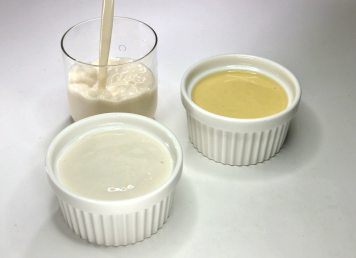
As awareness of sustainable and environmentally friendly nutrition grows, so does interest in plant-based products. However, for these products to be successful in the long term, they must also be appealing in taste. A central issue here is that legumes, a key ingredient in many plant-based products, often possess undesirable aroma and flavor notes that consumers do not appreciate, including an unpleasant bitter taste and a characteristic earthy-pea aroma. Additionally, anti-nutritional compounds like saponins can limit market success. Here, thermal treatment of legumes offers an effective solution to significantly increase the acceptance of these products.
Previous Applications and New Perspectives
Since the late 1990s, pea protein concentrates have increasingly been used as a substitute for fishmeal in salmon feed production. This development was driven by various factors, including the rising costs and limited availability of fishmeal. Pea protein has proven to be a suitable alternative, as it provides the necessary nutrients for the growth and health of salmon while meeting the requirements of the food industry.
Dynamic Air Classification as a Key Technology
Dynamic air classification (also called protein shifting) is gaining importance worldwide for the production of protein and starch powders due to its lower technical complexity and reduced energy and water consumption compared to multistage wet-chemical processes. Originally, the wet-chemical method of protein extraction, which focused primarily on starch, established itself as the dominant process for obtaining protein and starch fractions. Traditionally, protein is isolated by chemical precipitation, but this process is increasingly being replaced by protein shifting through dynamic air classification.
Currently, around 150 projects worldwide are planning to build classification plants. An advantage of the wet-chemical process is the ability to “isolate” proteins and starches with higher protein concentrations (usually over 80%) and to obtain by-products such as fibers from the seed interior, which are excellently suited for the production of meat substitute products. However, the construction and operating costs (energy, water) of a plant are significantly higher than those for dynamic air classification. However, dynamic air classification has the disadvantage of not altering the natural aroma and bitter taste of the native intermediate products.
Food Safety Through Thermal Treatment
The thermal treatment of legumes enables effective control of microbial contaminants, thereby contributing to food safety. Processes can be adapted to preserve the sensory properties of the product while achieving an optimal balance between safety
and quality.
Thermal Treatment as a Key to Quality
Legumes should not be consumed raw by humans. Through thermal treatment, anti-nutritional proteins such as lectins and
protease inhibitors can be inactivated, and the content of secondary plant compounds can be reduced. This treatment not only improves digestibility and mouthfeel but also significantly reduces bitter taste and undesirable aroma notes. In the past, legumes for concentrate production were primarily milled and then classified, often with dynamic air classification. This process yields two main fractions: a starch concentrate and a protein concentrate. While starch was traditionally used primarily in baked goods, the focus has now shifted to the protein fraction, especially for applications in meat substitute products.
Technological Diversity Through Thermal Pretreatment
The availability of concentrates that have been thermally treated to varying degrees increases the range of technological applications. However, the solubility of debittered proteins is generally lower, which is a common issue for plant proteins. This limitation makes their use in powders for sports nutrition and drinks more challenging compared to whey-based materials. One solution to improve this could be hydrolysis or spray-drying.
Alternative Legume Protein Sources Compared to Wheat and Soy Protein
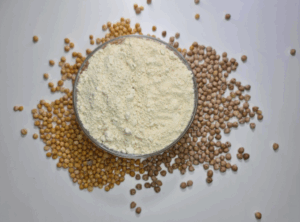 While wheat and soy proteins continue to dominate the plant protein market due to their technological advantages and cost, they face increasing criticism, especially regarding imported soy and allergen labeling requirements. These challenges create opportunities for alternative plant protein sources like domestic legumes, which, through targeted thermal treatments, can not only eliminate bitterness and earthy aromas but also offer technological benefits for further processing into meat substitute products such as textured vegetable protein (TVP) or high-moisture meat analog (HMMA) through extrusion processes.
This heating reduces the bitter taste and characteristic pealike aroma of legumes. Often, remaining undesirable aroma and flavor notes are further masked by adding flavorings and spices. Additionally, baking and cooking contribute to the reduction of these undesirable factors. In many applications, such as in milk substitutes, either no heating or only minimal short-term heating is applied to native protein and starch concentrates.
Sensory Improvements Through Thermal Treatment
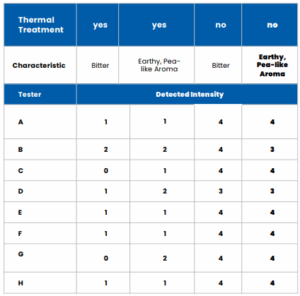 The benefits of debittering and deodorization were determined in a sensory evaluation procedure, including the DIN 10967-1 profiling test. In this procedure, eight sensory-trained evaluators, trained according to ISO8586 -1 and -2 standards, were repeatedly trained with roasted coffee beans to identify specific attribute characteristics (e.g., bitterness). The evaluation of thermally treated legumes was conducted in a test room following DIN 10962 standards.
Table: Sensory evaluation of thermally treated chickpea protein concentrate, where the differences were most pronounced. The temperatures of the thermal treatment reached a maximum of 140°C.
Intensity Scale:
- 0 not detectable
- 1 very weakly detectable
- 2 weakly detectable
- 3 clearly detectable
- 4 strongly detectable
The advantage of debittering and deodorization was determined in a sensory testing procedure, including DIN 10967-1 profiling tests. Here, eight trained sensory assessors, trained according to ISO8586-1 and -2 standards, were trained multiple times with roasted coffee beans to recognize defined attribute properties (e.g., bitterness). Testing of thermally treated legumes was conducted in a test room following DIN 10962.
Bitterness: Before thermal treatment, the average intensity was 3.875, which reduced to 0.875 after treatment, indicating a reduction of approximately 77.42%. Earthy/pea-like Aroma: Before thermal treatment, the average intensity was 3.75, which decreased to 1.375 after treatment, representing a reduction of around 63.33%.
Application Areas for Thermally Treated Protein and Starch Concentrates
Debittered, deodorized protein and starch concentrates are primarily used in:
- Vegan milk substitutes like yogurt alternatives,
beverages - Baked goods
- Vegan sausage alternatives
- Powders for sports drinks and weight-loss drinks
- Protein bars
- Vegan egg substitutes – both liquid and dry
- Vegan spreads
- High-protein pasta
- Pet food
Summary
The use of thermally treated protein or starch concentrates appears to be sensible, especially if the product is not reheated in further processing. Even in TVPs, adding 30% of debittered intermediates can be beneficial, as the heating process is shorter compared to HMMA products.
The development of taste-neutral plant protein preparations is being intensively pursued. There are already initial productionscale processes that look promising. Of particular importance is the utilization of the much larger sidestream, actually the main stream in dynamic air classification, namely the starch concentrate.
Author: ROBERT H. SPIEGEL, freelance product and process developer, researches processes for the deodorization and
debittering of legumes.